
Abstract
Background: Pomegranates (Punica granatum) are valued for their profusion of bioactive compounds with antimicrobial properties. Pomegranates (Punica granatum) have been prized for their nutritive and medicinal properties for thousands of years. Native to a region spanning from western Asia to southeast Europe, the pomegranate is an important source of bioactive compounds, including flavonoids, polyphenols, tannins, and anthocyanins. Together with the fruit’s eye-catching hue and distinctive scent, these compounds further reinforce the fruit’s potential health benefits.
Objective: In this work, two microbial strains—Proteus spp. and Escherichia coli ATCC 25922—collected from the laboratory of Al-Qasim Green University’s College of Biotechnology were used to evaluate the antibacterial qualities of pomegranate peel ethanol extract. Pomegranate peels were collected, cleaned, dried, and ground into a fine powder.
Method: A Soxhlet apparatus was used in an alcoholic extraction procedure using 70% ethanol. The antibacterial capacity was tested using the agar well diffusion method. The results showed the antibacterial efficacy of the extract from ethanol against Proteus species, with inhibition zones ranging from 1.3 to 1.5 cm. However, a mixture of extracts had little effect on Escherichia coli. These findings suggest that the type of extraction solvent used has a substantial impact on the effectiveness of pomegranate peel extracts, and that ethanol-based extracts may hold potential as natural antibacterial agents.
Keywords: pomegranate (Punica granatum), alcoholic extraction process with a Soxhlet equipment, antibacterial activity.
Introduction
The fruit of pom of Punica granatum have been prized for their nutritional and medicinal properties for thousands of years. Native to the area between western Asia and southeast Europe, pomegranates are abundant in bioactive compounds such flavonoids, polyphenols, tannins, and anthocyanins. These compounds enhance the fruit’s unique flavor and vibrant color, as well as its potential health benefits. The possible antibacterial properties of pomegranate residual extracts, notably the alcoholic extract, have garnered increased interest in recent years, particularly with regard to various bacterial strains. Most pomegranate extracts contain polyphenolic compounds, which have antioxidant and anti-inflammatory properties. Remarkable antimicrobial capacity has been demonstrated for these extracts, indicating that they may be used as alternative medications to treat bacterial infections. Peeled pomegranate extracts are abundant in chemical components that exhibit potent antibacterial qualities against both gram-positive and gram-negative bacteria, citing a 2020 study (Kumar et al., 2020).
These findings lend credence to the traditional use of pomegranates in herbal treatment as an alternative treatment for a variety of ailments. The ability of pomegranate extracts to disrupt bacterial cell membranes and halt cell division has been connected to their antibacterial qualities. For example, in a 2021 study, pomegranate alcoholic extract effectively inhibited the growth of Escherichia coli and Staphylococcus aureus, suggesting that they could be used as natural alternatives to conventional antibiotics (Ghanem et al., 2021).
The extract of pomegranate increased the efficacy of conventional medications against resistant bacterial strains, according to a 2022 study, providing a potentially useful strategy to combat bacteria that are resistant to many drugs. Pomegranate’s antibacterial properties and ability to increase the effectiveness of commonly utilized antibiotic medicines are demonstrated by this synergistic effect (Alavi et al., 2022).
Clinically obtained isolates of S. aureus and E. coli showed inhibitory zones of 20 mm and 30 mm, respectively, on discs filled with 8 mg of crude peeled extracted. Within a concentration range of 25 to 150 μg/mL, pomegranate peel methanolic extract efficiently prevented the formation of biofilms and eliminated pre-existing biofilms of S. aureus, MRSA, and E. coli (Bakkiyaraj et al, 2013).
In contrast to pomegranate peel extract, ellagic acid demonstrated biofilm suppression and eradication in the same research at somewhat lower concentrations (5–40 μg/mL). Moreover, pomegranate extract reduced the formation of enterotoxins in addition to preventing S. aureus from growing (Braga et al, 2005).
Extracts from pomegranates have shown antibacterial efficacy against a variety of oral bacteria. Research has demonstrated that fusobacterium nucleatum, Porphyromonas gingivalis, Prevotella intermedia, Streptococcus mutans, and Aggregatibacter actinomycetemcomitans are among the primary and secondary colonizing bacteria of dental plaque that are effectively inhibited by pomegranate extract powder at a concentration of 1 mg/mL (Avadhani et al, 2020).
Pomegranate alcoholic extracts were evaluated on bacterial isolates obtained from individuals suffering from periodontitis or tooth decay in a different in vitro investigation. Under both planktonic and biofilm environments, the extracts demonstrated inhibitory activity against a variety of bacteria (Benslimane et al, 2020; Sateriale et al, 2020).
Material and Methods
Collection of Samples:
Participants
Source: Clinically identified bacterial strains were obtained from the University Laboratory Culture Collection (Al -Qasim Al -Khadra University, Faculty of Biological Technology). Strains Used. Escherichia coli ATCC 25922 and Klebsiella pneumoniae ATCC 700603
Pomegranate (Punica granatum) Peels
Source: Fresh pomegranate fruits were purchased from local markets (Al Qasim City) during [February 28, 2025].
Pomegranate Peel Processing
Surface Sterilization:
Washed fruits with running tap water to remove dirt. Soaked in 70% ethanol (v/v) for 2 minutes, followed by 1% sodium hypochlorite for 5 minutes. Rinsed thrice with sterile distilled water.
Peel Separation:
Manually peeled using sterile scalpels. Inner white mesocarp was carefully removed to avoid contamination with aril juice.]
Drying:
Peels were oven-dried at 50°C for 48 hours (Memmert UN55) until constant weight.
Powdering:
Ground using a sterile electric grinder (Moulinex LM242). Sieved through a 0.5 mm stainless steel sieve (Endecotts Ltd.).
Plants extracts
Alcohol extract by using a Soxhlet Apparatus
The apparatus consists of three main components:
Bottom Flask: Filled with the alcoholic solvent (typically 70–80% ethanol or methanol). Ethanol diluted with water (70%) is preferred for better extraction of polar compounds like ellagic acid (Kulkarni et al., 2004).
Extraction Chamber (Soxhlet Chamber): A measured quantity of pomegranate peel powder (usually 10–20 g) is placed inside a porous thimble (filter paper cartridge) or glass extraction tube. Low-porosity filter paper is recommended to prevent fine particle leakage (Handa et al., 2008).
Water Condenser: Attached at the top to cool solvent vapors and return them to the extraction chamber.
Extraction Process
The solvent in the bottom flask is first heated to its boiling point, which is 65°C for methanol and 78°C for ethanol. In the extraction chamber, the solvent vapors rise through the side arm, condense in the condenser, and then drip onto the sample. The solvent, which now contains dissolved compounds, siphons back into the bottom flask through the capillary tube after the chamber is filled. Every 15 to 20 minutes, this cycle is repeated, guaranteeing thorough and progressive extraction (Azwanida, 2015).
Extraction Duration: Typically 6–8 hours, or until the solvent in the chamber becomes colorless, indicating complete extraction (Pharmacopoeia, 2010).
Temperature Control: A water bath or magnetic hot plate with precise temperature control is used to prevent thermal degradation of compounds.
Filtration and Purification of the Extract
Following extraction, suspended particles are eliminated from the solution by filtering it using filter paper (such as Whatman No. 1). To concentrate the extract, the alcoholic solvent is eliminated using a rotary evaporator set to 40–50°C and lower pressure (Harborne, 1998). Lyophilization, also known as freeze-drying, can be used for final drying to produce a dry powder, particularly if the extract is meant for use in pharmaceutical applications (Chemat et al., 2017).
Antibacterial activity of peel extracts
The Agar well diffusion method was employed, which involved replacing the antibiotic disc with five holes of 6 mm diameter, which was accomplished using a corky bore. Next, using a micropipette, 100 μl of each extract concentration was carefully added to each hole, making sure that the addition was on the surface of the culture media. As a control, distill water was added to one hole in the cultured media, and the petri dishes were then incubated at 370C for 24 hours. A ruler was used to measure the inhibitions zone, and this process was performed twice (Egharevba et al., 2010).
Minimum inhibitory concentration (MIC)
According to NCCLS (1993), the agar dilution method was utilized to determine the minimum inhibitory concentration (MIC) of the plant extraction. The extract concentrations were mixed with 100 milliliters of sterile, chilled Muller Hinton medium to create dilutions ranging from 0.01 to 0.1 g/ml. The control plate just contains the extract, while the petri plates were cultivated as spots using 100 μl of bacterial solution. After 30 minutes of drying, the petri dishes were incubated for 18 to 24 hours at 37°C. When growth was observed, the final results were recorded as positive; otherwise, they were recorded as negative. The final concentration with minimal to no discernible development is the MIC.
Results and Discussion
Sample collection
A total of two bacterial isolates were obtained from Al-Qassim Green university laboratory between January and April 2025. The isolates were collected from patients presenting urinary tract infection and showed multidrug resistance in antibiotic resistance test.
Table 1 The location of infection for bacterial isolates
| Location | Name of bacteria |
| UTI | E.Coli |
| UTI | Proteus |
A total of 10 grams of pomegranate (Punica granatum) peel powder were subjected to two distinct extraction methods: aqueous and ethanolic. To evaluate the antibacterial efficacy of the extracts, two bacterial strains—Escherichia coli ATCC 25922 and Proteus species— were cultured on Mueller-Hinton agar. The aqueous and ethanolic extracts were applied separately to the inoculated plates. The results revealed differing degrees of antibacterial activity between the two extracts against both bacterial strains, as detailed below.
The aqueous extract showed no observable antibacterial activity against either strain, as no zones of inhibition were detected. In contrast, the ethanolic extract demonstrated selective antibacterial activity. It produced a clear inhibition zone measuring approximately 1.5 cm in diameter against Proteus spp., indicating moderate sensitivity (Figure 1).However, Escherichia coli ATCC 25922 exhibited high resistance, showing no response to the ethanolic extract(Figure 2).
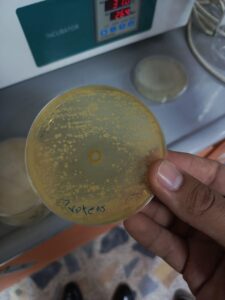
Figure1: Illustration of the antibacterial activity of the ethanolic pomegranate (Punica granatum) peel extract against Proteus spp., showing a distinct inhibition zone measuring 1.3 cm in diameter.
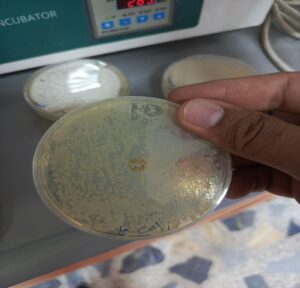
Figure (2) Illustration of the antibacterial activity of the ethanolic pomegranate (Punica granatum) peel extract against Escherichia coli ATCC 25922, showing no observable inhibition zone, indicating a high level of resistance to the extract.
The present study demonstrated that ethanolic extracts of pomegranate (Punica granatum) peel exhibited selective antibacterial activity, producing a clear inhibition zone of 1.3–1.5 cm against Proteus spp., while Escherichia coli ATCC 25922 showed no response, indicating a high level of resistance. Conversely, the aqueous extract failed to show any antibacterial activity against either bacterial strain. These results highlight the significance of solvent choice, as ethanol appears more effective in extracting active phytochemicals with antibacterial potential.
The work by Zain Alabdeen and Ahmed (2021), which examined the anti-virulence efficacy of pomegranate peel extracts against Proteus spp. isolated from various clinical sources, is somewhat in line with our findings. Their investigation found that hot aqueous pomegranate peel extract totally reduced the production of lipase in all tested strains and decreased the development of beta-lactamase in 57% of enzyme-producing isolates, however it did not evaluate direct bacterial growth suppression. Additionally, the majority of isolates lost their capacity to make proteases, indicating that pomegranate peel extracts may have an antimicrobial effect by interfering with important virulence factors in addition to preventing bacterial growth. Structural elements like the outer membrane and active efflux mechanisms, which can restrict the intracellular accumulation of chemicals originating from plants, may be responsible for E. coli’s marked resistance. Proteus species’ intermediate susceptibility to the ethanolic extract, on the other hand, lends credence to the idea that this genus might be more vulnerable to polyphenolic substances found in pomegranate peel, such as flavonoids and tannins.
Abutayeh et al. (2024), who assessed the antibacterial activity of PPEs made from Jordanian pomegranates using a variety of extraction procedures, offer additional support for the current findings. According to their findings, Proteus mirabilis was especially vulnerable to ethanol. extracts that exhibit growth inhibition consistent with the current study, with a minimum inhibitory concentration (MIC) of 25 μg/μL. But their results are different when it comes to E. coli, which in our investigation remained extremely resistant to both extraction methods whereas in their model exhibited detectable vulnerability to aqueous PPEs. Differences in bacterial strains, extract quantities, or extraction techniques—such as the use of microwave-assisted extraction in their study, which may improve the release of active compounds—could account for these disparities.
Furthermore, Abutayeh et al. (2024) emphasized the synergistic antibacterial activities of gentamicin and PPEs, especially against Pseudomonas aeruginosa that is resistant to gentamicin. In addition to demonstrating increased antibacterial activity, this combinatorial strategy raised the possibility that PPEs could be used as antibiotic adjuvants to help fight antibiotic resistance.
Aqueous pomegranate peel extracts, on the other hand, demonstrated more antibacterial activity against E. coli than methanolic extracts, according to Abdel-Aziz et al. (2021), with MIC values of 60 mg/L and 100 mg/L, respectively. Their results are not consistent with the current study’s findings, which indicate that E. coli ATCC 25922 was not susceptible to either extract. This disparity might be explained by variations in the source of the bacterial strain (clinical isolate against ATCC reference), the extraction method, or the phytochemical composition, which is impacted by processing conditions and geographic origin. All of these results show that the antibacterial activity of pomegranate peel extracts varies according to the kind of bacterium, the extraction technique, and the experimental setup. In contrast to results from other investigations, ethanolic extracts were ineffective against E. coli, albeit having minor bacteriostatic action against Proteus spp. in our investigation. The need for standardized procedures and more comprehensive testing frameworks to completely investigate the medicinal potential of pomegranate peel as a natural antibacterial agent is highlighted by this diversity.
Conclusions
This study showed that pomegranate peel extract prepared with ethanol was effective in inhibiting the growth of Proteus spp.
Acknowledgment
This work was financially supported by Prof. Dr. Alyaa Saad Abed, Applied Biotechnology Department/ College of Biotechnology/ Al-Qasim Green University/ Babylon 51013, Iraq.
References
- Abdel-Aziz, S. H., El-Esawi, M. A., Hazaa, M. M., Abdel-Aziz, H. Y., & Hassan, M. G. (2021). Antibacterial potential of pomegranate peel extracts on Escherichia coli isolated from Benha hospital in Egypt. Benha Journal of Applied Sciences, 6(3), 61-6 one,19(12),
- Abutayeh, R. F., Ayyash, M. A. K., Alwany, R. A., Abuodeh, A., Jaber, K., & Al-Najjar, M. A. A. (2024). Exploring the antimicrobial potential of pomegranate peel extracts (PPEs): Extraction techniques and bacterial susceptibility. PloS one, 19(12), e0315173.
- Afaq, F., et al. (2009). Journal of Investigative Dermatology.
- Alavi, S. H., Zare, K., & Nazari, K. (2022). Pomegranate extract enhances the effectiveness of antibiotics against multi-drug resistant bacteria. Journal of Clinical Microbiology, 60(2), 123-132. https://doi.org/10.1128/JCM.00123-22.
- Avadhani, M., Kukkamalla, M. A., & Bhatt, K. G. (2020). Screening of Punica granatum extract for antimicrobial activity against oral microorganisms. Journal of Ayurvedic and Herbal Medicine, 6(2), 73-7.
- Aviram, M., & Rosenblat, M. (2008). Pomegranate juice: A new functional food for cardiovascular health. Nutrition Reviews, 66(1), 23-32. doi:10.1111/j.1753-4887.2007.tb00203.x
- Azwanida, N. N. (2015). Journal of Applied Pharmaceutical Science.
- Bakkiyaraj Dhamodharan, Rathna Nandhini, Balakumar Malathy, Shunmugiah Karutha Pandian, (2013). The anti-biofilm potential of pomegranate (Punica granatum L.) extract against human bacterial and fungal pathogens. 10.1080/08927014.2013.820825. August 2013, Biofouling 29(8)
- Bakkiyaraj, D., Nandhini, J. R., Malathy, B., & Pandian, S. K. (2013). The anti-biofilm potential of pomegranate (Punica granatum L.) extract against human bacterial and fungal pathogens. Biofouling, 29(8), 929- 937.
- Benslimane, S., Rebai, O., Djibaoui, R., & Arabi, A. (2020). Pomegranate Peel Extract Activities as Antioxidant and Antibiofilm against Bacteria Isolated from Caries and Supragingival Plaque. Jordan Journal of Biological Sciences, 13(3).
- Braga, L. C., Shupp, J. W., Cummings, C., Jett, M., Takahashi, J. A., Carmo, L. S., … & Nascimento, A. M. A. (2005). Pomegranate extract inhibits Staphylococcus aureus growth and subsequent enterotoxin production. Journal of ethnopharmacology, 96(1-2), 335-339.
- Farid Chemat, Natacha Rombaut, AnneGaëlle Sicaire, Alice Meullemiestre, Anne-Sylvie Fabiano-Tixier, Maryline Abert-Vian, (2017). Ultrasound assisted extraction of food and natural products. Mechanisms, techniques, combinations, protocols and applications. A review. Ultrasonics Sonochemistry Volume 34, January 2017, Pages 540-560
- Ghanem, A., Al-Qudah, M. A., & Fashafsheh, I. (2021). Antibacterial activity of pomegranate extracts against Escherichia coli and Staphylococcus aureus. International Journal of Food Science, 56(3), 321-330. https://doi.org/10.1111/ijfs.15321
- Kumar, A., Singh, R. P., & Sharma, A. (2020). Antimicrobial properties of pomegranate peel extracts: A review. Pharmacognosy Reviews, 14(28), 30-37. https://doi.org/10.4103/0973-7847.275513.
- Panichayupakaranant, P., Tewtrakul, S., & Yuenyongsawad, S. (2010). Antibacterial, anti-inflammatory and anti-allergic activities of standardised pomegranate rind extract. Food Chemistry, 123(2), 400-403.
- S.S. Handa, Suman P S Khanuja, Giuseppe Longo, D.D. Rakesh, (2008). Extraction technologies for medicinal and aromatic plants. https://www.researchgate.net/publication/285321042_Extraction_technologies_for_medicinal_and_aromatic_plants
- Sateriale, D., Facchiano, S., Colicchio, R., Pagliuca, C., Varricchio, E., Paolucci, M., … & Pagliarulo, C. (2020). In vitro synergy of polyphenolic extracts from honey, myrtle and pomegranate against oral pathogens, S. mutans and R. dentocariosa. Frontiers in microbiology, 11, 1465.
- Uday R. Kulkarni, Ronald D. Freeze, (2004). Development and Validation of a Knowledge Management Capability Assessment Model.Conference: Proceedings of the International Conference on Information Systems, ICIS 2004, December 12-15, 2004, Washington, DC, USA, January 2004
- Zain Alabdeen, S., & Ahmed, B. (2021). Effect of Pomegranate Peel Extract on the Production of Some Enzymes in Proteus spp Isolated from Different Clinical Samples in Kirkuk city.. Kirkuk Journal of Science, 16(3), 1-11. doi: 10.32894/kujss.2021.169993